Preparing for a Move During Storms or Freezes: Emergency Moving Service Tips
Moving can feel like trying to cross a river on stepping stones—tricky, even when the water’s calm. But when a storm or freeze is brewing, every step is a leap. At Ready, Set, GO!, we know what it takes to keep your move steady, even when the weather’s anything but.
Storms and freezes can bring chaos. Power outages, icy roads, and sudden delays are just the start. But with the right plan, you can keep your move on track and your belongings safe.
Weather Risks and Moving 🌧️
Imagine loading boxes while rain pelts the roof, or carrying a couch across an icy driveway. Weather can turn a routine move into a high-stakes game. Here are the biggest risks:
- Slippery walkways: Ice and water make for dangerous footing.
- Water damage: Rain or melting snow ruins cardboard boxes and seeps into furniture.
- Power outages: Elevators may stop, garage doors may not open—suddenly, simple tasks are hurdles.
- Traffic hazards: Storms and freezes slow roads, snarl traffic, and cause unexpected detours.
The National Weather Service and local emergency management guides stress extra caution when moving during severe weather. Always check forecasts before your moving day.
Emergency Preparedness Checklist
You can’t control the weather. But you can control how prepared you are. Use this checklist to stay ahead:
- Check the forecast: Start days ahead. Keep checking until the last box is in the truck.
- Stock up on essentials: Flashlights, batteries, bottled water, blankets, and a first-aid kit.
- Waterproof your belongings: Heavy-duty plastic wrap, waterproof bins, and tarps are key.
- Protect floors and walkways: Non-slip mats and salt or sand for icy spots.
- Have backup power: Portable chargers for phones; consider a generator for larger operations.
- Emergency contacts: Save numbers for your moving_service, utility companies, and local emergency services.
- Plan alternate routes: Know detours in case roads are blocked.
Packing for a move in a storm isn’t just about boxes—it’s about thinking two steps ahead.
What to Do If Delayed
A storm can leave you stuck between two places. If you’re delayed:
- Stay put and stay safe: Don’t risk travel in hazardous conditions. Listen to local emergency alerts.
- Protect your items: Move boxes away from windows or flood-prone areas.
- Communicate: Let your moving_service and anyone expecting you know about delays.
- Document everything: Take photos of packed items and conditions—they’ll help if you need to file an insurance claim.
Remember, safety comes before schedules. The American Red Cross stresses not to travel unless absolutely necessary during severe weather.
Protecting Your Belongings 🛡️
When storms hit, your stuff needs extra armor.
- Wrap electronics and valuables: Use plastic wrap or sealable bags.
- Elevate boxes: Don’t let them sit directly on wet pavement or floors.
- Use heavy-duty bins: Especially for important documents and fragile items.
- Double-check moving truck seals: Make sure doors close tight and no water can seep in.
If you have large appliances or oversized furniture, consider professional Installation near you to reduce risk of damage during transport.
DIY vs. Call a Pro
Storm or freeze? Sometimes it’s better to let the pros take the lead.
When DIY Makes Sense
- You have lightweight items and flexible timing.
- You’re only moving a short distance.
- Weather is mild or improving.
When to Call a Moving_Service
- You have heavy, bulky, or high-value items.
- You’re facing severe weather, power outages, or road closures.
- You need Installation, Inspections, or urgent Repair.
Professional movers have the gear and know-how—think of them as your stormproof bridge across the river.
What Pros Do On Arrival
When Ready, Set, GO! shows up during an emergency move, here’s what happens:
- Quick site assessment: We check for hazards like ice, standing water, or downed lines.
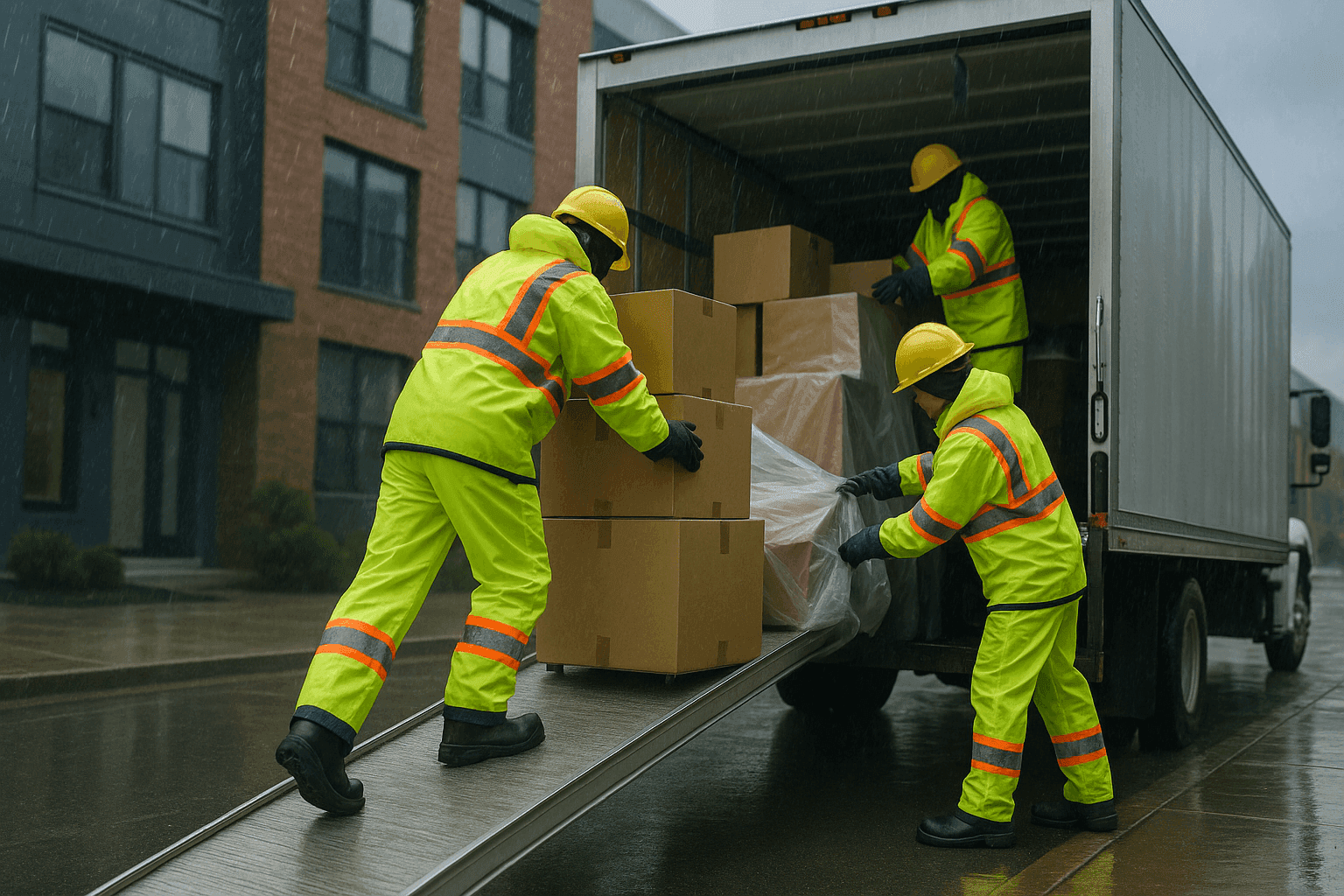
- Protective gear: Crew wears weather-appropriate clothing and uses slip-resistant mats.
- Efficient loading: Items are prioritized for safety—fragile and moisture-sensitive items are loaded first.
- Continuous communication: We update you if weather changes or delays are expected.
Our team follows guidelines from the Occupational Safety and Health Administration (OSHA) and local emergency management agencies to keep your move safe.
Prevention & Maintenance
Avoiding problems is always easier than fixing them mid-move.
- Schedule installations and inspections early: Don’t wait until the last minute for appliance hookups or disconnections.
- Maintain walkways: Shovel, salt, or sand before anyone starts carrying boxes.
- Service vehicles: Make sure moving trucks are winter-ready—good tires, working lights, and full fuel tanks.
- Test backup systems: If you have sump pumps or generators, run them before the move.
Regular maintenance before moving day can mean the difference between a smooth move and a soaked sofa.
Costs & Time Factors
Moving during a storm or freeze can take longer and sometimes cost more.
- Time: Expect delays—loading takes longer when you’re dodging puddles or scraping ice.
- Labor: Crews may need more hands to move safely in bad weather.
- Materials: You might need extra packing supplies like tarps, plastic wrap, or waterproof bins.
- Special services: Emergency moving_service, Installation, or urgent Repair can add to the total bill.
While you can’t predict every twist, planning for some added time and cost helps you stay in control.
When It’s an Emergency 🚨
Some situations call for immediate action:
- Flooding or severe leaks: Move valuables and electronics to higher ground.
- Power outages in freezing temps: Prioritize moving perishables and heat-sensitive items.
- Structural damage: If your home or business is unsafe, leave immediately and call emergency services.
Ready, Set, GO! offers rapid-response moving_service and consultation—so you’re never left facing the storm alone.
FAQ
Q: Can I move appliances during a freeze?
A: Yes, but disconnect and drain them first. Water left inside can freeze and cause damage. Schedule Installation near you for professional assistance.
Q: What if my moving truck can’t reach my house?
A: Have a backup plan. Use smaller vehicles or a dolly to shuttle items if needed. Communicate with your moving_service for the best options.
Q: Should I pack differently for a stormy move?
A: Absolutely. Use more layers of protection, waterproof bags, and double-seal fragile items.
Q: Are moving_services available 24/7 during emergencies?
A: Many offer flexible scheduling, but always confirm availability and any extra charges for emergency calls.
Local & Seasonal Considerations
Weather doesn’t play favorites. In some regions, winter storms are a yearly ritual. In others, flash floods or hurricanes pop up with little warning.
- Know your local risks: Check your city’s emergency management site for seasonal hazards.
- Plan for the season: Winter? Focus on ice and snow. Summer? Watch for storms, extreme heat, or hurricane warnings.
- Stay flexible: Sometimes the safest move is to reschedule.
Your move is important. But your safety—and the safety of your belongings—comes first.
Moving in a storm or freeze isn’t easy. But with the right strategy and support, you’ll weather the storm and reach your new home or office, safe and sound.
Call Ready, Set, GO! now — or reach us anytime at 855-513-8584 .